‹ BackTaiyo Yuden

Taiyo Yuden

Policy and Re
2026-09-01 05:00:00

Treasury yields break past 4.75% as September seasonality meets the AI compute trade

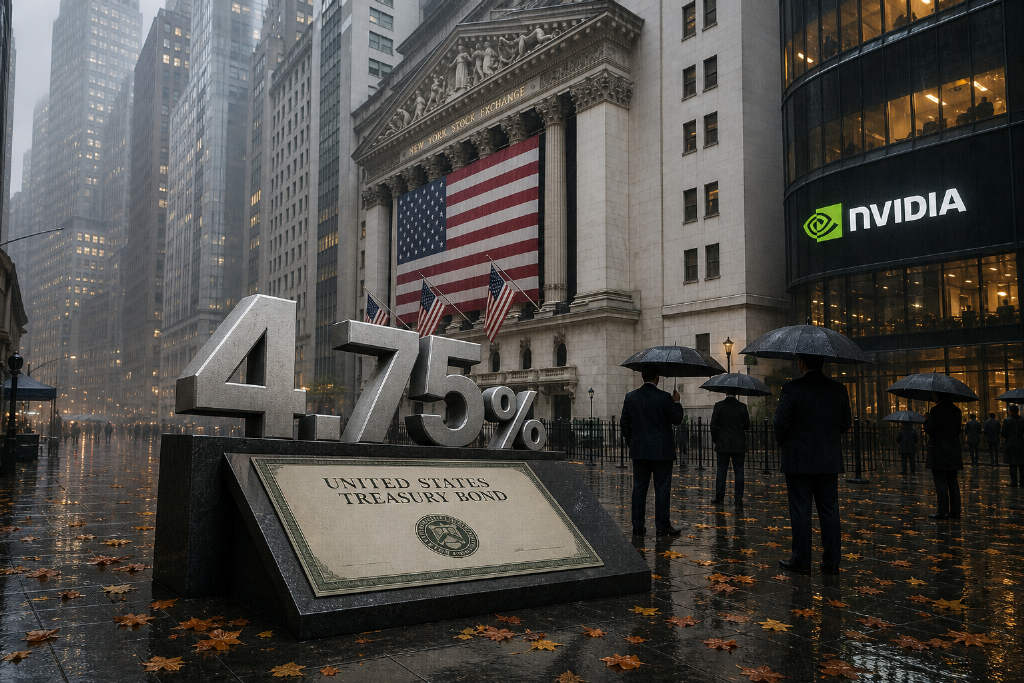
U.S. stocks closed lower Monday as investors weighed renewed Middle East tension, rising oil prices and a fresh jump in Treasury yields, with the 10-year yield climbing past the closely watched 4.75% level. The Dow Jones Industrial Average fell 0.70%, the S&P 500 dropped 0.33%, and the Nasdaq Composite lost 0.12%, even though all three major indexes still posted gains for August. According to PANews, Wall Street is turning more cautious heading into what has historically been the weakest month for the S&P 500 over the past 30 years, with an average decline of 0.8% in September. JPMorgan lowered its equity stance from bullish to “tactically cautious/neutral,” while Dakota Wealth Management and Franklin Templeton flagged 4.75% and 5% on the 10-year Treasury as key thresholds for risk assets. At the same time, the AI infrastructure trade remained active. Anthropic signed a $35 billion cloud computing agreement with Nvidia-backed Lambda, with data centers built by Hut 8 and leases held by Nvidia. Nvidia also announced a $3.5 billion convertible bond investment in MediaTek to jointly build AI factories. Storage, semiconductor and crypto-related stocks outperformed, while utilities sold off sharply and large-cap tech names turned mixed as higher rates pressured long-duration valuations.

1140
Treasury yields break past 4.75% as September seasonality meets the AI compute trade
Bitcoin
2026-08-31 09:43:13

Bitcoin stalls below its 50-week average as traders weigh September pullback risk

Bitcoin held near $78,000 during the Asian session on the last trading day of August even as macro pressure built, with oil prices rising on an escalation in the Iran situation and hawkish remarks from Waller reviving bets on a September rate hike. From its roughly $62,900 close at the end of July, BTC was still up more than 24%, but attention has shifted to the 50-week moving average near $81,000, a level that has historically marked either the end of a bear market or the point where rallies failed and rolled over. Traders cited $76,800 to $77,000 as key support, with downside targets around $75,500 and $74,300 if that band breaks. Resistance is clustered at $78,400, $79,400 to $80,800, while a move back above $82,000 to $83,000 is seen as necessary to reopen upside. Several market commentators flagged historical seasonality and technical signals as reasons for caution in September, while others argued Bitcoin may already be in a “soft bull market.” The report also tracked spot ETF inflows, token unlocks, U.S. equity moves, weakness in crypto-linked stocks and miners, and a packed macro and earnings calendar heading into early September.

1180
Bitcoin stalls below its 50-week average as traders weigh September pullback risk
Federal Reser
2026-08-31 04:43:00

Waller’s hawkish Jackson Hole debut resets September hike odds as AI names head into a crucial earnings week

Markets started the new week repricing the Federal Reserve after Chair Waller’s first keynote speech since taking office at Jackson Hole. He said recent improvement in PCE and CPI had not yet produced a “meaningful improvement” in underlying inflation and warned that the Fed still had work to do if inflation failed to return to the 2% target clearly and quickly enough. Traders moved fast: the implied probability of a September rate hike jumped from about 40% to 62.6%, while the 2-year U.S. Treasury yield rose roughly 12 basis points to around 4.36%. U.S. equities closed lower on Friday, with the Dow down 0.02%, the S&P 500 off 0.25%, and the Nasdaq falling 0.52%. Semiconductor stocks gave back gains after the post-NVIDIA rally, while cloud and software shares outperformed on expectations that AI commercialization could direct a large share of inference spending toward Amazon Web Services, Microsoft Azure, and Google Cloud. Barclays said AI model companies may send $35-$45 of every $100 in revenue to inference compute, with cloud vendors capturing about $10-$20 in operating profit. Commodities also reacted sharply. Gold fell more than 3% and dropped below $4,400, touching $4,396 and breaking its 200-day moving average, while silver lost more than 4%. Oil moved the other way after U.S.-Iran tensions escalated near the Strait of Hormuz. The week ahead centers on the Sept. 4 U.S. August nonfarm payrolls report and a packed slate of AI-related earnings, including Broadcom, Dell, Snowflake, Credo, MongoDB, Palo Alto Networks, Zscaler, and Ciena.

1390
Waller’s hawkish Jackson Hole debut resets September hike odds as AI names head into a crucial earnings week
ChainCatcher
2026-08-27 06:15:21

TrendForce says Samsung Electro-Mechanics raises Q4 2026 MLCC quotes for OEM and ODM clients

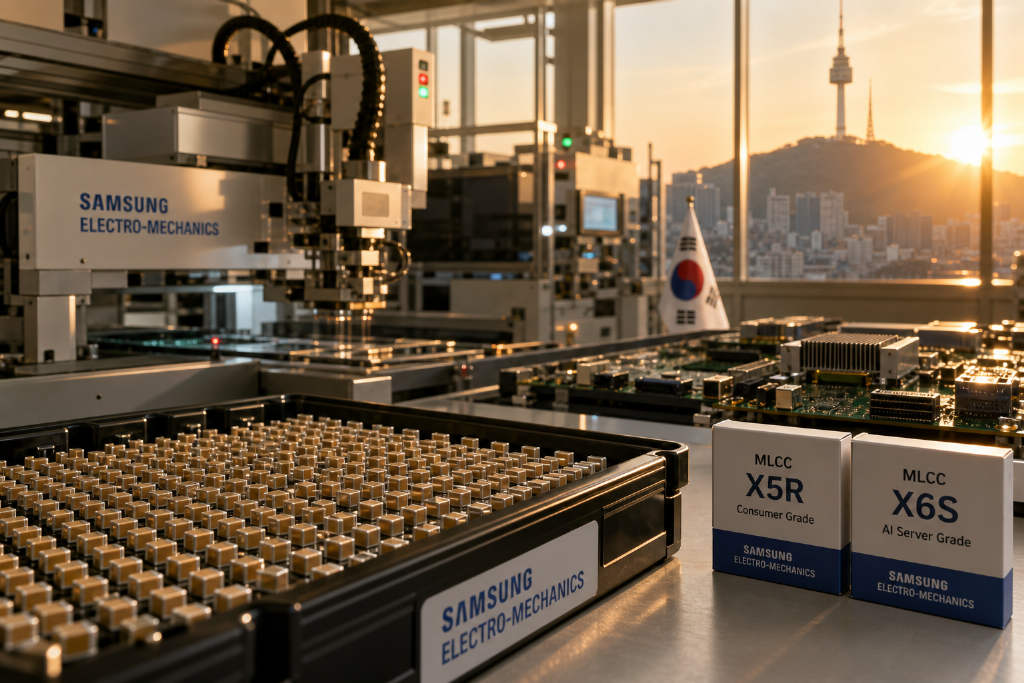
Samsung Electro-Mechanics has started raising fourth-quarter 2026 quotations for OEM and ODM customers, according to the latest MLCC industry research from TrendForce. The move, first reported in the research note cited by ChainCatcher, signals that the MLCC market has entered an upward phase. TrendForce estimates that Samsung Electro-Mechanics will raise prices for consumer-grade X5R products by an average of 25% to 30% for OEM and ODM clients. The research says the company is using the increase to curb ordering demand and free up capacity for expansion of higher-end production lines. For high-end X6S products used in AI servers, pricing will depend on negotiations with individual customers, with average increases expected to range from 10% to 20%. Japanese manufacturers Murata, Taiyo Yuden, and Kyocera are currently maintaining flat quotations and have not followed with price increases. Whether those suppliers decide to adjust pricing later will be a key indicator of whether the current uptrend broadens across the sector.

1140
TrendForce says Samsung Electro-Mechanics raises Q4 2026 MLCC quotes for OEM and ODM clients
MLCC
2026-08-10 00:39:27

AI Demand Triggers MLCC Supply Crunch, Buyers Pay Up to Triple Prices

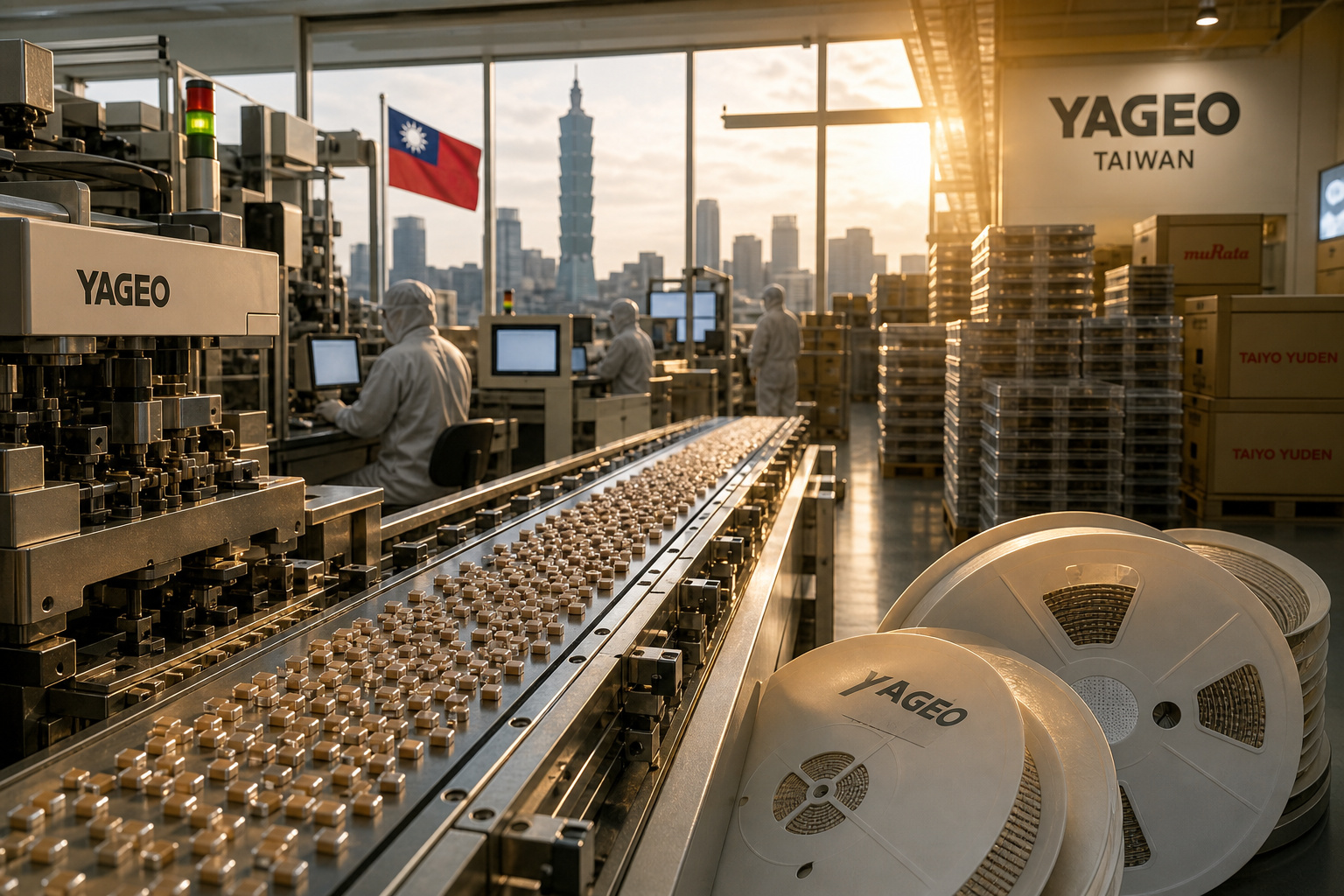
Strong AI demand is tightening the market for multilayer ceramic capacitors (MLCCs), with some customers paying two to three times normal prices to secure supply from major makers such as Yageo and Murata. Delivery lead times have now extended to 12–16 months. Yageo said capacity utilization is climbing, with standard products expected to hit above 90% this quarter from roughly 80% and specialty products staying high, pushing the company closer to full loading. A growing number of AI-related clients are seeking long-term agreements to lock in capacity for six months or even years. Yageo is expanding output in Kaohsiung, Suzhou, Vietnam and Mexico. Large MLCC makers are prioritizing big customers and long-standing partners, leaving smaller buyers with tighter supply and forcing them to scramble and pay premiums. Meanwhile, Japanese suppliers Murata and Taiyo Yuden have raised their outlooks, citing stronger-than-expected demand from AI servers and data centers that is boosting use of high-capacitance parts.

1720
AI Demand Triggers MLCC Supply Crunch, Buyers Pay Up to Triple Prices
MLCC
2026-08-10 00:22:12

AI Demand Sparks MLCC Supply Scramble; Yageo Lead Times Stretch to 12-16 Months

Rising AI demand has triggered a scramble for multilayer ceramic capacitors (MLCCs), with some buyers paying two to three times the usual price to secure supply from Yageo and Murata. Industry sources say the market has turned into a highest-bidder-wins contest. Major manufacturers are running near full capacity, and lead times have stretched to 12–16 months. Yageo confirms that AI-related customers increasingly want to lock in capacity ahead of time to reduce supply risk. The company expects standard-product utilization to climb from around 80% in Q2 to above 90% this quarter, while specialty products stay above 90% as overall loading moves toward full. Yageo is also expanding capacity, with new output ramping up quarter by quarter. Japanese peers are equally bullish: Murata has sharply raised its full-year profit forecast, and Taiyo Yuden says AI server demand is surpassing expectations. Industry watchers note that large customers typically get higher capacity allocation priority, leaving smaller buyers to pay premiums for limited supply. Yageo adds that more clients are signing long-term agreements to lock in passive component supply for the next six months to several years, a shift aimed at reducing supply-chain risk.

2140
AI Demand Sparks MLCC Supply Scramble; Yageo Lead Times Stretch to 12-16 Months
Policy Regula
2026-07-30 14:13:07

Global markets price the same risk as tech stocks slide, oil jumps and leverage trades unwind

A broad risk repricing swept across markets on July 30, linking sharp losses in China’s semiconductor names, divergent reactions to earnings from Microsoft and Meta, a record retail selloff in U.S. equities, a spike in crude prices after a Middle East escalation, and deleveraging pressure in South Korea. In mainland China, the STAR 50 fell 5.38% and the ChiNext Index lost 3.97%, while 83 stocks hit limit down and 3,635 declined. Semiconductor packaging, PCB, AI chip and optical module names were hit across the board, with Zhongji Innolight posting 59.7 billion yuan in turnover, its highest ever for a single day. In the U.S., Microsoft beat revenue expectations and reported Azure annual revenue above $100 billion, while Meta topped revenue forecasts but missed on earnings per share and saw Reality Labs lose $4.6 billion in the quarter. Vanda Research said retail investors logged their largest one-day net sale since the March 2020 COVID crash. Elsewhere, reports in the article said Iran fired ballistic missiles at the U.S., pushing WTI and Brent sharply higher. In South Korea, Samsung Electronics posted record second-quarter revenue and operating profit, yet local equities still traded lower as the market focused on deleveraging.

1930
Global markets price the same risk as tech stocks slide, oil jumps and leverage trades unwind
Samsung Elect
2026-07-29 02:58:29

Report says Samsung Electro-Mechanics to raise some MLCC prices by 30% from Aug. 1, with Taiyo Yuden set to follow

Samsung Electro-Mechanics has notified customers that it will raise prices by 30% on some multilayer ceramic capacitor, or MLCC, products starting Aug. 1, 2026, according to a report cited by Citrini analyst Jukan on July 29. The company said persistent growth in global electronics demand has increased pressure across the supply chain. It added that, despite efforts to improve production efficiency and expand capacity, it still needs to adjust prices on some products to maintain product quality and stable supply. The new pricing will apply to all MLCC products under Samsung Electro-Mechanics’ Markup Business Code and will take effect for shipments made on or after Aug. 1. The same report said Japanese MLCC maker Taiyo Yuden also plans to raise MLCC prices from Sept. 1. Taiyo Yuden cited continued increases in raw material costs and tight supply-demand conditions, and said that even after the price increase it may still be unable to fully meet customer demand, with delivery times for some orders also remaining uncertain.

2730
Report says Samsung Electro-Mechanics to raise some MLCC prices by 30% from Aug. 1, with Taiyo Yuden set to follow